

The Prose With Nothing Behind It
Deleuze, AI, and The Logic of Sense — Part 1

LLMs can lie. Stranger still, they can tell the truth and leave us feeling that the telling was empty anyway.
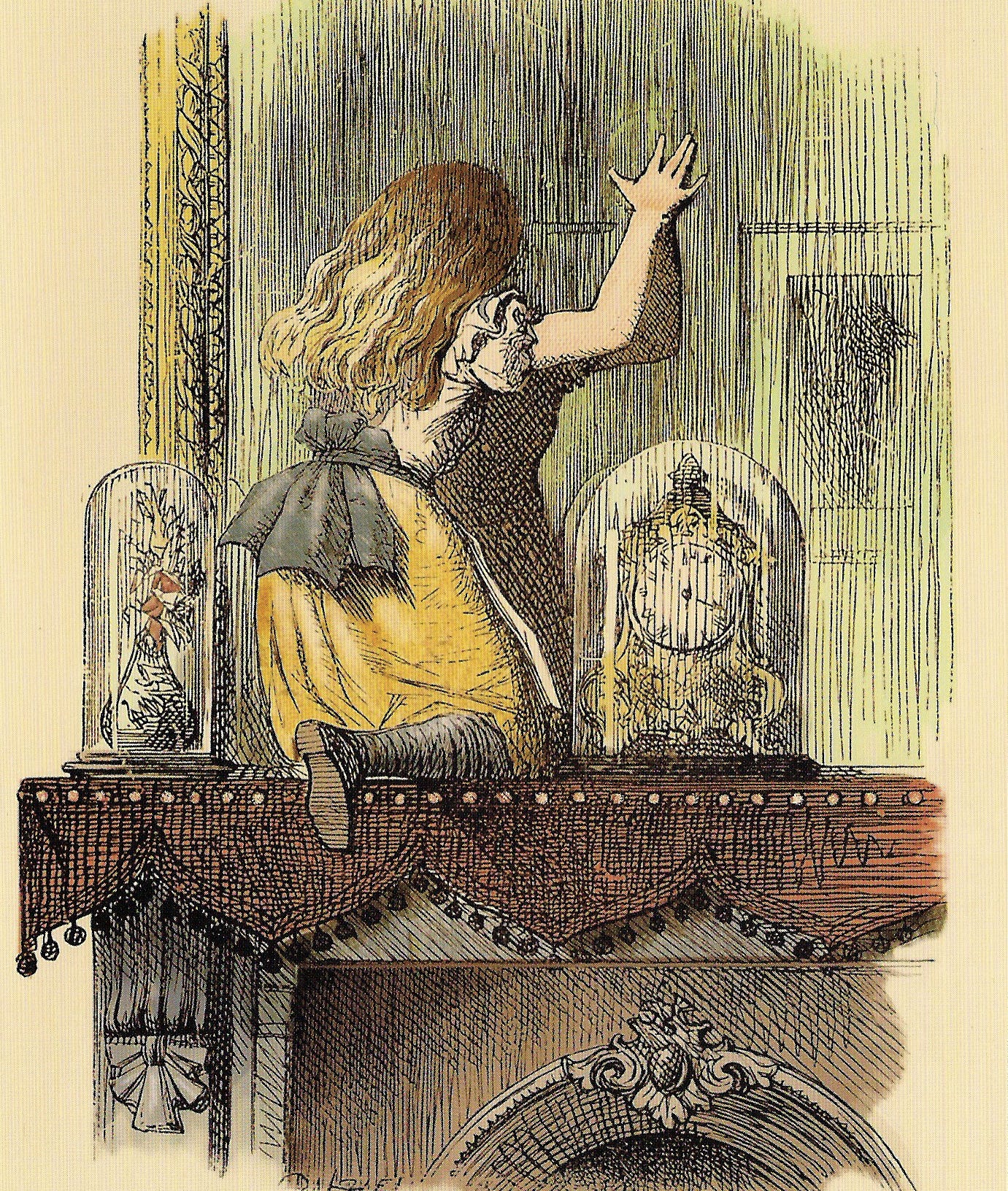
Two complaints about LLM prose get blended in public discourse and shouldn’t be. The first complaint is that the model lies. It produces confident claims about things that do not exist: fake citations, invented cases, plausible quotes attributed to real philosophers. The second complaint is a little vaguer, yet many people assert some version of expertise in recognizing it: that feeling that there is nothing behind the prose, such that even when every reference checks out, even when the propositions asserted are technically true—something essential but ineffable is missing. The first complaint is a denotation problem. The second is a different dimension altogether, and we need to put words to it (and possibly many previous efforts fail because they choose the wrong words to put.)
Recall that in a previous post I dubbed one symptom of the second problem, semantic smoothing, and gestured to one counter-practice: insatiability. I did not say enough about what kind of operation smoothing actually is, perhaps, and I don’t think smoothing fully captures what LLMs are supposed to be missing. Now I will try. Our argument will run through Gilles Deleuze and Lewis Carroll, an act of hubristic folly and possibly a cliff upon which all my readers will dash their patience.
Confession: I am not a fan of Deleuze’s work with Guattari. I can acknowledge the contribution of Anti-Oedipus in bare outline, but I just rebel at trying to think alongside A Thousand Plateaus. (The two seem to be sharing trip reports from dropping acid in the archives: entertaining, perhaps, but not well-grounded.) But on his own, Deleuze is usually a sharp philosopher, doing careful and well-reasoned work. Scholarly fans and theory bros will kick sand in my face for this position, perhaps, but here I stand: I can do no other.
Four dimensions
In the third chapter of The Logic of Sense, Deleuze distinguishes four dimensions of the proposition. The standard three first:
Denotation, the relation to a state of affairs: is the snow white, does that legal case exist, was this article published in the year or the journal or by the author that the chatbot claims?
Manifestation, the relation to a speaker: does the proposition express the beliefs, desires, and intentions of the one who uttered it, so that “I believe it will rain” can tell you about my beliefs as much as about the weather?
Signification, the relation to other propositions: are concepts being activated, are inferences being licensed? “All bachelors are unmarried” and “All squares are four-sided” and similar such a priori claims work at the level of conceptual meaning rather than empirical fact.
Then Deleuze adds a fourth.
Sense is the fourth dimension of the proposition. The Stoics discovered it along with the event: sense, the expressed of the proposition, is an incorporeal, complex, and irreducible entity, at the surface of things, a pure event which inheres or subsists in the proposition. (LS 19)
The book is about this fourth thing, obviously, but I note immediately that Deleuze himself has to work to convince the reader that sense isn’t merely reducible to denotation, manifestation, or signification. You know it’s irreducible because he says so, but perhaps he protests too much! What exactly is it that gets expressed by a proposition without being reducible to what the proposition denotes, what the speaker manifests, or what concepts it activates?
“In truth, the attempt to make the fourth dimension evident is a little like Carroll’s Snark hunt. Perhaps the dimension is the hunt itself, and sense is the Snark.” (LS 20)
This is a delicious setup, because it seems pretty unlikely that the Snark is meant to exist even within the nonsense-logic bounds of the poem! Yet still it drives the hunt. And then Deleuze goes on to invoke Husserl from whom he has derived this quadripartite project, and draw a line from the Stoics, through medieval logicians, and on to Meinong to give the project philosophical heft, so we’re immediately sucked back in.
Deleuze’s elevator pitch: maybe the way to figure out sense is to study nonsense.
Now here’s the quixotic quest: I’m going to try to be analytically clear about a notoriously delirious work of continental philosophy. And I’m going to try to do one extra thing to increase the difficulty: make Deleuze’s mystery help us answer another mystery about AI and LLMs. (A bear of very little brain, indeed....)
Surely this has already been solved? In their SEP entry, Daniel Smith, John Protevi, and Daniela Voss use “The Battle of Waterloo” to illustrate the concept of sense. Considered as a state of affairs, Waterloo was bodies and bullets and mud. The sense of the battle, however, when understood as an event expressed in propositions about it, is an incorporeal entity that subsists at the surface of language, neither identical with the bodies nor with the words about it.
“It is exactly the boundary between propositions and things,” Deleuze writes, and “nothing is more fragile than the surface” (LS 82). (See? Deleuze is good. He writes good, and makes lines like this pay off. We’ll be back for it in future posts.)
Sense is pre-truth. By “pre-truth sense” we mean the intelligibility layer that lets language move, words be uttered, before they have been disciplined by the world, the speaker, or other words. The world has its say through verification (checking the fact denoted), through holding a speaker accountable (confronting them). The speaker can rise to an occasion (whose time and place constrains what it can mean), or be subjected to a consequence, a state of affairs they must inhabit. Before it can be either false or true, sense is what falsehood and truth are both made from.
Yet “Waterloo” is a topic we can speak about without producing the corpses it created, or the strategies that led to its outcomes: it’s open for use as a metaphor, an analogy, a subject of fiction or a deferred reference. It’s a layer of meaning subject to genre expectations; it can serve as the subject of minor hallucinations. The same goes for a “trial,” which we can mention without producing the verdict that would discipline the utterance, which can be a metaphor for suffering or a metonymy for Kafka’s prose. Because sense isn’t just that sometimes we use terms to denote a thing, and sometimes we use them to connote another. That’s signification: the different relations of concepts that language allows.
If I'm right about this layer, then large language models mass-produce signification, the inferential machinery at the surface, in forms that read as sense. I suspect that this is only the surface mark of sense produced without what Deleuze calls a two-series circulation that would generate it. Either way, the disciplines that turn the layer into truth have to be done somewhere else.
Two failure modes, and a deeper one underneath
The four dimensions give us a grid for locating the two complaints from the opening.
Hallucination is a denotation failure. The case the lawyer cites doesn’t exist, the article the scholar drops into a footnote wasn’t published, the quote is fabricated or misattributed. Public discourse focuses on this failure which is rampant but also mechanical, and ultimately fixable in the same way Wikipedia resolves it: “Citation needed!” Nothing need be taken on faith, in either man or machine. Then those citations can be verified mechanically: LLMs can write themselves software that places claims on a ledger and zeroes out the errors. Fact-checking, despite its present disrepair, is a machine-cognizable practice. Which means this first complaint about LLM prose is solvable in principle, even if the engineering is hard and the implementations so far are uneven.
The second complaint often appears as a manifestation problem: without a speaker who can stand behind the words, whose beliefs and desires are being expressed? A proposition arrives in a kind of existential passive voice, without a speaker who could be said to mean it. Manifestation in Deleuze is the dimension where the speaker’s belief and desire show up, but a model has neither. It can only “bullshit” in pretending to do so; it produces propositions that have the form of manifested speech without manifesting anything. (I worked through the manifestation question, via Perry, Lewis, Brandom, and Habermas, in two earlier posts: here and a technical, overly verbose follow-up here. Here we’ll be treating manifestation as a gateway drug to sense.)
These two failure modes get conflated in public discourse as “LLMs are unreliable.” They are different orders of problem. Humans make errors too: we bullshit and hallucinate and misattribute citations. But fixing denotation does not fix the complaint about emptiness: it produces prose with no one behind it. It does not manifest a speaker. No one bears the burden of meaning-making, and it feels like it shows.
It’s easy to dip into essentialism here, though. A large language model can get every citation right: it can call itself “I” and apologize for its errors. It can develop “memory” and recall previous conversations. I think we have to wonder whether this is merely a matter of time: “And one more thing,” some off-brand Steve Jobs will probably soon say. “Now AI has a soul.”
Something will still be missing.
LLMs are signifying machines. The models’ weights set up a whole tensor calculus as an inferential web: they activate concepts, draw and justify inferences, and produce semantic coherence across long passages. This is the dimension they’re strongest in. It’s also why their prose reads as if sense is happening. Signification is what the model uses to simulate the other dimensions: they swap semantic relations between propositions for statistical ones, and perhaps thereby demonstrate that that’s all that semantic relations ever were.
Sense is slippery, but the slipperiness is supposed to be the point. Deleuze defines it negatively (what's left after the other three are subtracted) and structurally (the surface produced by two-series circulation), and through paradox (the regress that opens every time you try to say what sense is), which is why it's hard to hold steady.
Signification is the inferential web, which we can trace and describe; sense is the surface-effect that requires the two-series structure, which we can also describe even if only through piling up “It’s not X, it’s Y” epanorthotic correctios.
If this is an accidental failing, future systems with better training or different architectures might patch it. But I think it’s structural. The Logic of Sense is an argument for why.
Carroll provides the working apparatus from here forward. Deleuze reads Carroll’s two Alice books as a pair, as reading instructions for sense. Wonderland is depths. Bodies in chaos, eating and being eaten, somatic mixtures, language as primitive scream. Alice falls. Through the Looking-Glass is surface: a chessboard governed by rules, mirror reflections, lateral motion across a flat field, language as differential play. Alice walks, square by square.
LLM prose is native to the Looking-Glass world. Lateral, structural, mirror-driven, played out on a flat field of statistical relations between tokens. Look out for part two!